
Safety, Scientific & Medical Communication
Safety Narratives and Reconciliation: Build a Traceable Case
Coming soon
Write a factual case narrative and reconcile the places where the sources disagree.
This course is still being built. Lessons are not available yet, and there is no enrollment, payment or certificate for it at this stage.
Practitioner · Self-paced
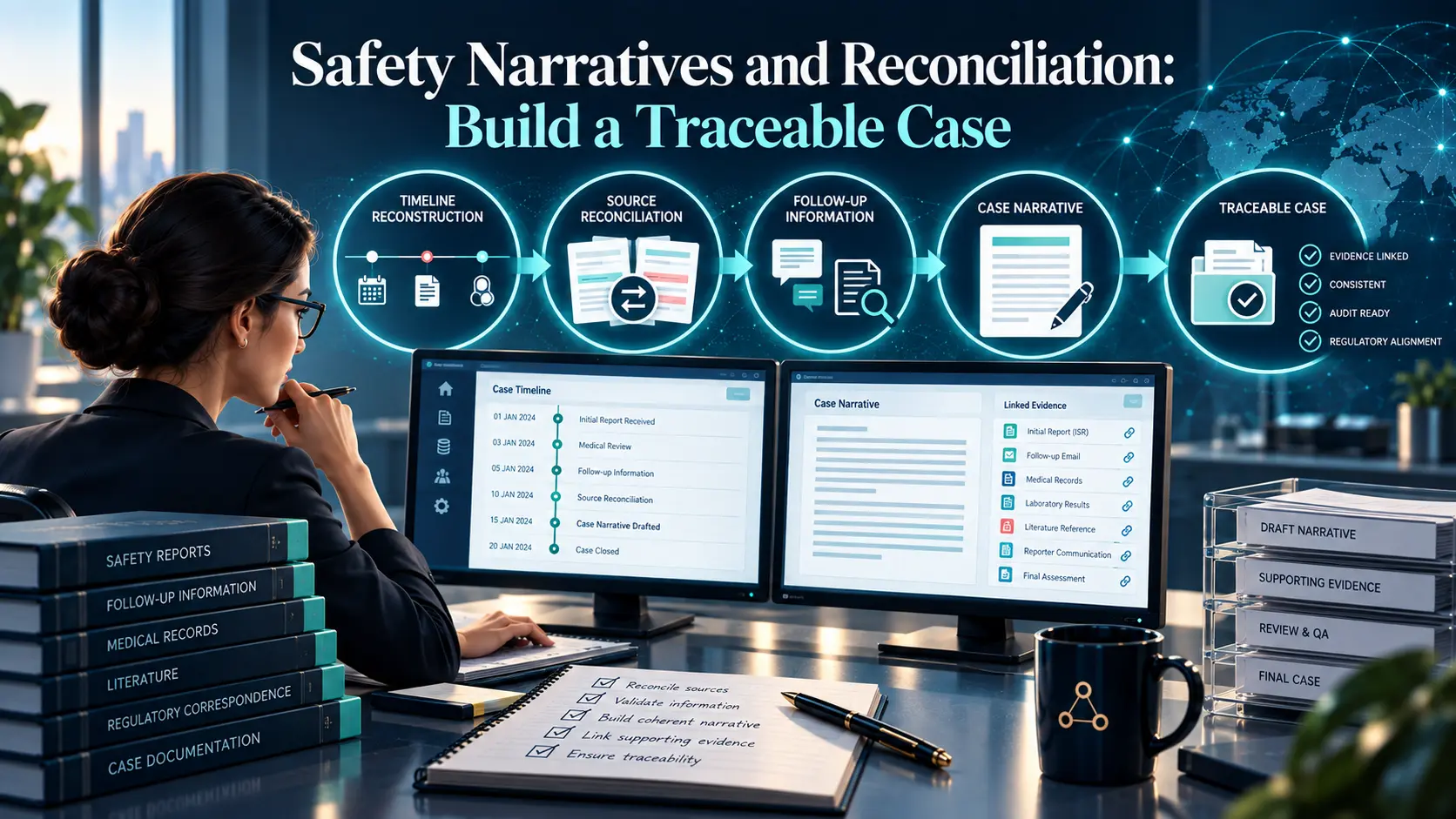
What this course covers.
- Who it is for
- Safety writers, data staff and reviewers.
- What you will be able to do
- Draft a factual narrative, reconcile inconsistent information and identify what remains unresolved.
- What you will produce
- A case narrative with a reconciliation summary and open items.
- Systems referenced
- No specific system access is required for this course.
Topics
- Narrative writing
- Source reconciliation
- Chronology
- Unresolved items
All scenarios used in Academy courses are fictional practice material. Course work is practice, not employment experience, and it is not a verified competency result.
Register your interest in this course
Also in Safety, Scientific & Medical Communication.
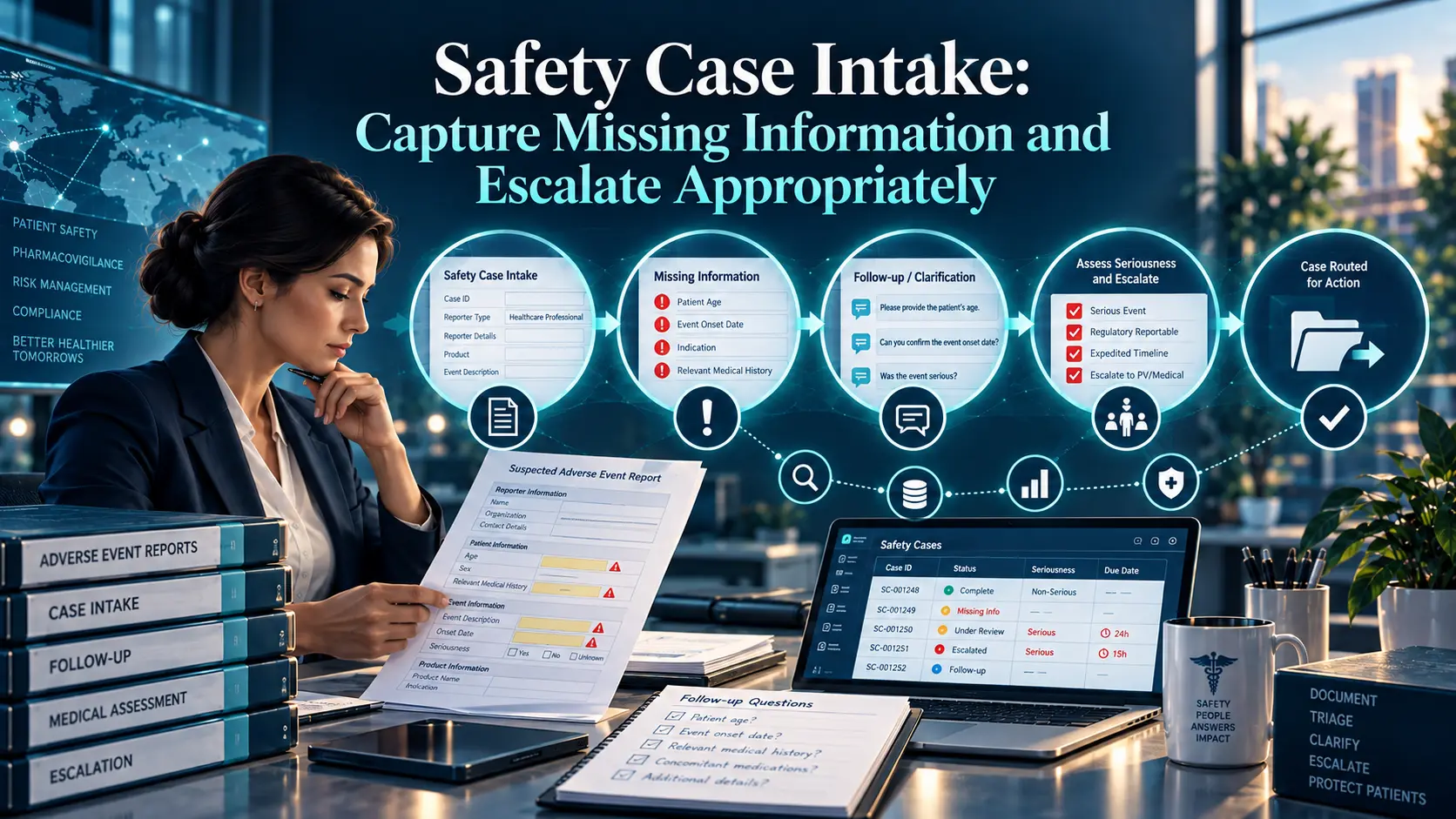 Coming soon
Safety case intake
Take an incomplete safety report and work out what is missing and what cannot wait.
 Coming soon
Medical information responses
Answer a fictional inquiry accurately, without promotion, and with the sources shown.
 Coming soon
Evidence appraisal
Read a study for its question, design and limits, then say plainly what it supports.